

 Select Language
To understand why certain solid rubber dog toys can withstand the immense jaw pressure of a large breed while others crumble, one must look at the molecular level. High impact elastomers are defined by their unique structural design, which balances flexibility with indestructible toughness. The primary source of their impact resistance lies in the strong interaction between flexible molecular chains. These chains are engineered to slide and stretch under stress rather than snapping, allowing the material to absorb and dissipate energy efficiently.
Furthermore, the low glass transition temperature of these elastomers ensures that the material remains pliable even in frigid conditions. In the context of rubber pet toys, this is a critical safety feature. Traditional plastics or low-grade rubbers can become brittle in the winter, leading to sharp fractures that can injure a dog’s mouth. High impact elastomers, however, maintain their high elasticity at low temperature, ensuring that the toy remains safe and functional year-round. This molecular resilience is the result of precise interfacial and structural design, where the polymer matrix is reinforced to prevent crack propagation.
Engineering Heavy Duty Rubber Dog Toys for Ultimate Durability
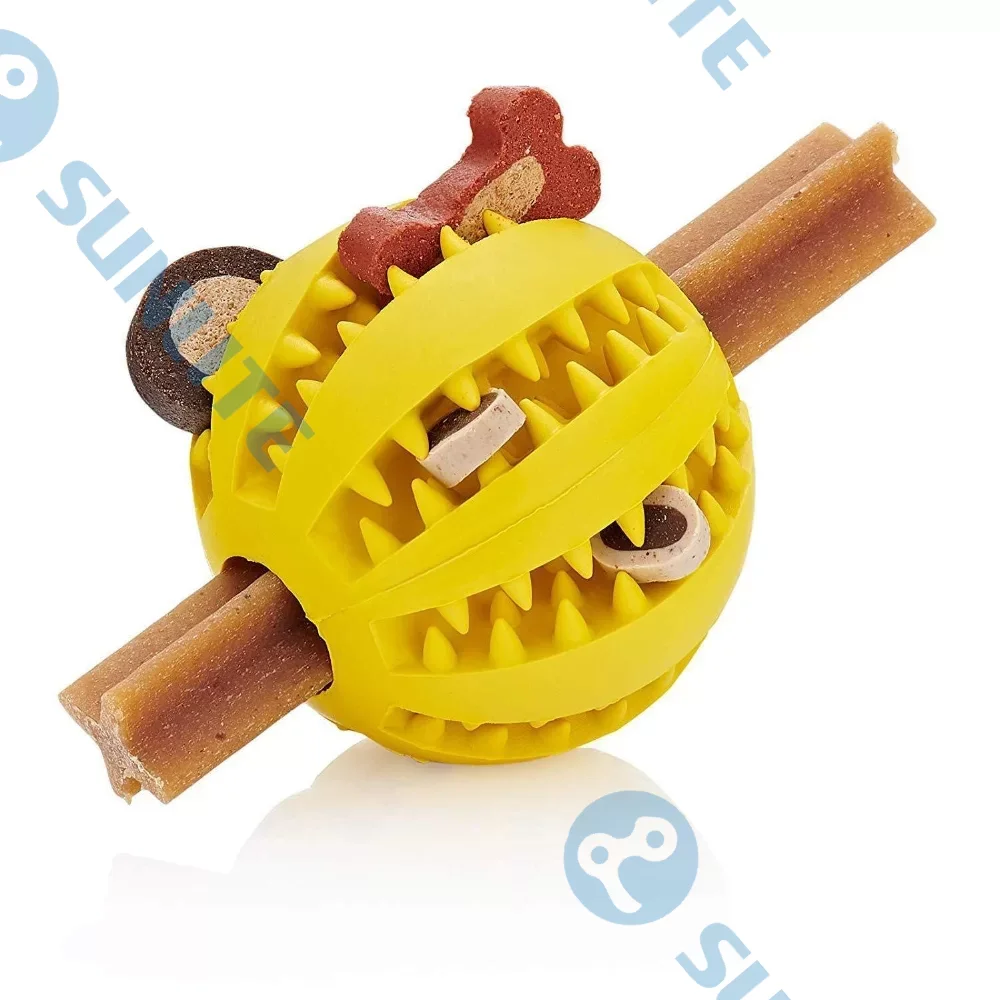
When we discuss heavy duty rubber dog toys, we are referring to products that have undergone rigorous process control to achieve peak dynamic properties. The "high impact" designation means these toys are specifically formulated to survive the "punching" force of a dog’s teeth. For heavy-duty applications, the material density and cross-linking density are optimized. Unlike standard pet store offerings, these materials do not fatigue easily.
The preparation technology involves a delicate balance: the material must be hard enough to resist puncturing but elastic enough to provide a satisfying "rebound" for the animal. This is where high-strength characteristics become vital. Because high impact elastomers exhibit low heat generation during repeated deformation, the toy does not degrade or soften when a dog chews on it continuously for hours. This thermal stability ensures that the mechanical integrity of the toy remains constant, providing a consistent experience for the pet and a long-lasting value for the owner.
Innovation in Rubber Dog Toys for Aggressive Chewers
The most significant challenge in the pet industry is designing for the "power chewer." These are dogs that view every toy as a puzzle to be dismantled. Standard toys fail because they lack the strong interaction between molecular chains found in high-impact materials. To create effective rubber dog toys for aggressive chewers, manufacturers utilize structural design to eliminate weak points.
However, durability is only half of the equation. A toy that is too hard can damage a dog's teeth. The beauty of high impact elastomers is their high elasticity. This allows the toy to deform slightly under the pressure of a bite, distributing the force across a larger surface area before springing back to its original shape. This "tough-but-soft" paradox is the hallmark of advanced elastomer technology. By controlling the molecular weight distribution during the preparation phase, engineers can create solid rubber dog toys that feel substantial and satisfying to the dog without being as unforgiving as a rock or a bone.
The Role of Solid Rubber Dog Toys in Dental and Mental Health
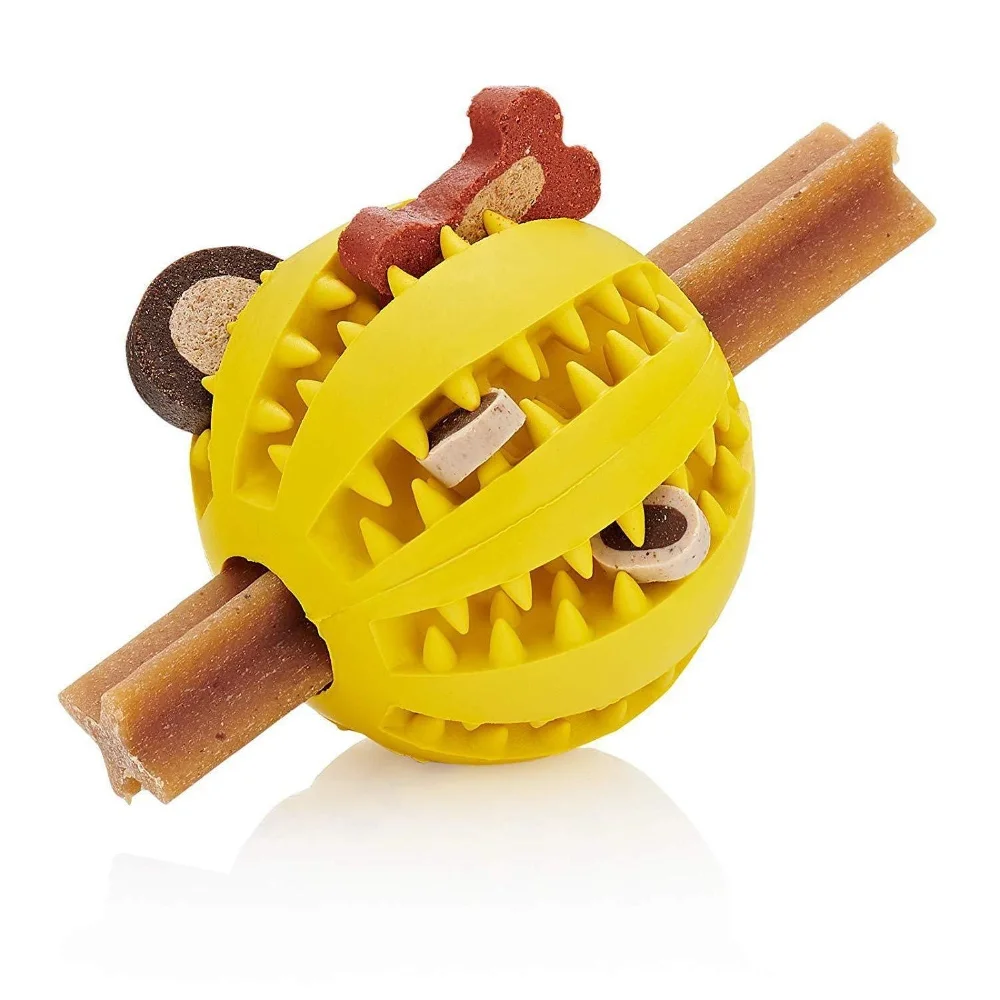
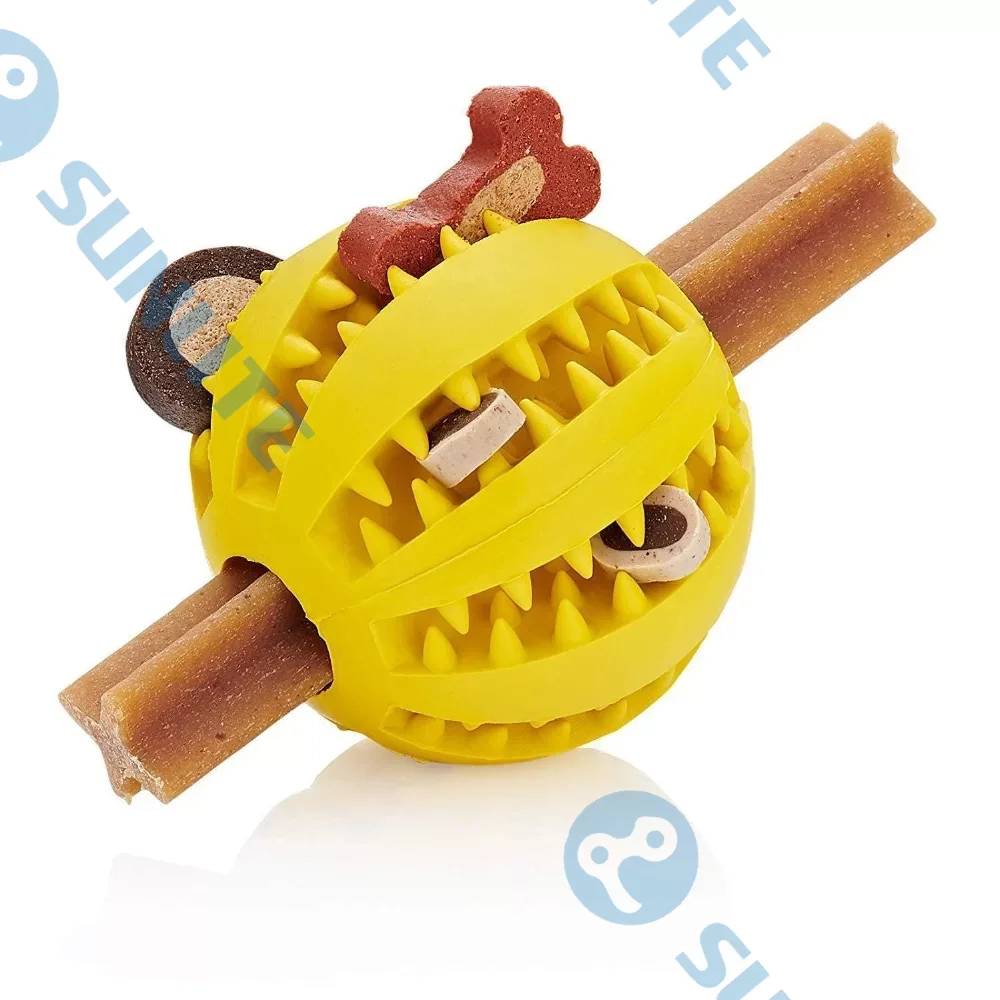
While the material science is complex, the application is straightforward: providing a safe outlet for a dog's natural instincts. Solid rubber dog toys serve a dual purpose. Physically, the high-strength nature of the elastomer allows for textured surfaces—nubs, ridges, and grooves—that can help clean teeth and massage gums without the fear of the dog tearing off and swallowing small pieces of the material.
Mentally, the dynamic properties of high impact elastomers add an element of unpredictability to play. Because the material has such high elasticity, its bounce is erratic and lively. This stimulates a dog’s predatory drive and keeps them engaged longer than a static object would. Because these materials meet the strictest environmental regulations—including RoHS 2.0, REACH, and PFAS-free standards—owners can rest easy knowing that their dog’s constant oral contact with the toy is not exposing them to harmful chemical leacheates.
Safety and Sustainability in High Impact Rubber Pet Toys
In the modern market, the function and characteristic of a material are no longer limited to its physical performance; environmental and biological safety are now paramount. High impact elastomer materials are at the forefront of this shift. As pet owners become more conscious of the materials entering their homes, the demand for rubber pet toys that are free from PAHs, POPs, and TSCA-regulated substances has skyrocketed.
The preparation technology for these elastomers has been refined to eliminate toxic catalysts and plasticizers. This ensures that even when a toy is subjected to high temperatures or heavy saliva, it does not release volatile organic compounds. The high strength at high temperature characteristic also means these toys can be easily sanitized in a dishwasher or with boiling water without losing their shape or structural integrity. This combination of physical endurance and chemical purity represents the gold standard for the future of the pet industry.
To understand why certain solid rubber dog toys can withstand the immense jaw pressure of a large breed while others crumble, one must look at the molecular level.