

 Select Language
In advanced engineering—whether designing the chassis of a next-generation electric vehicle(EV)or the enclosure of a high-speed CNC mill—uncontrolled kinetic energy is a critical structural liability.The root cause of acoustic resonance,operator fatigue,and multi-source noise rarely stems from poor primary mechanics.Rather,it originates from thin sheet metal structures acting as acoustic amplifiers.When kinetic energy from road friction,engine rumble,or industrial motors transfers into these panels,it creates low-frequency reverberations and structural micro-stresses.Standard sound-absorbing foam cannot fix this;foam only absorbs airborne soundwaves,it does nothing to alter the mass or stiffness of a vibrating solid structure.
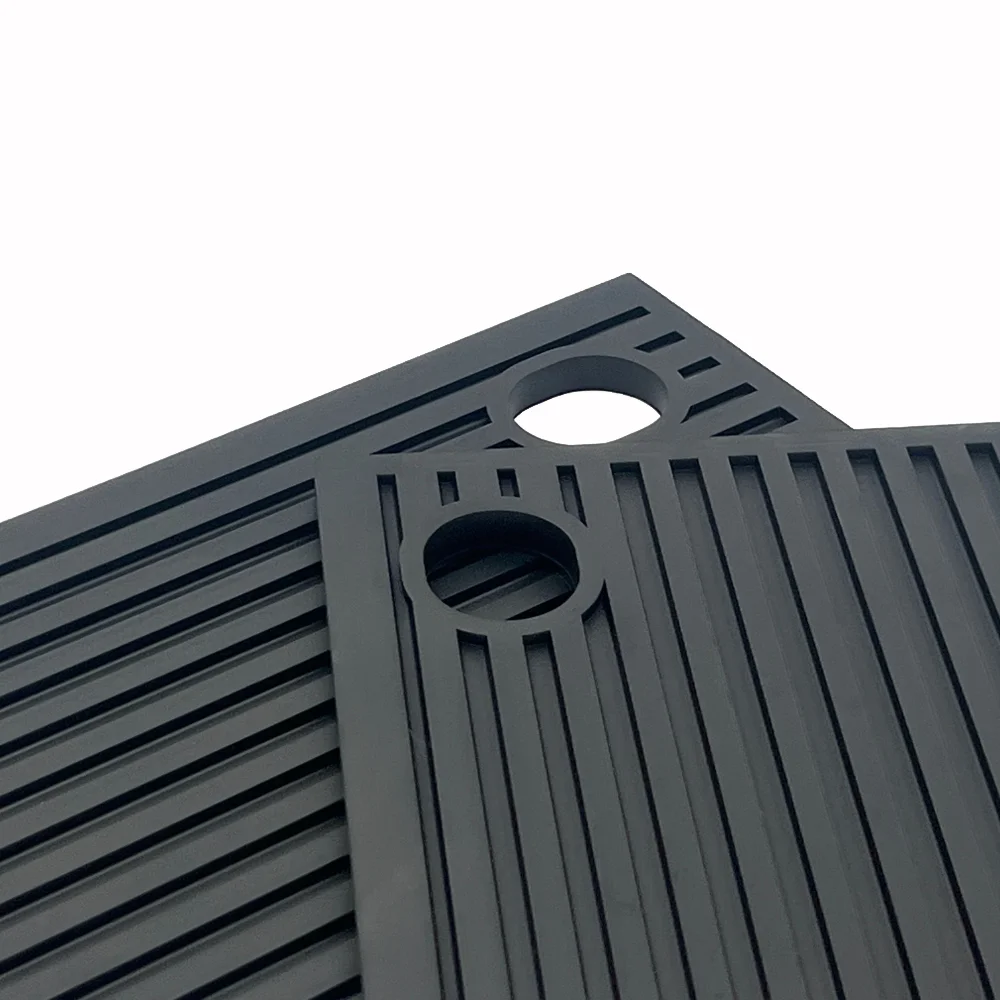
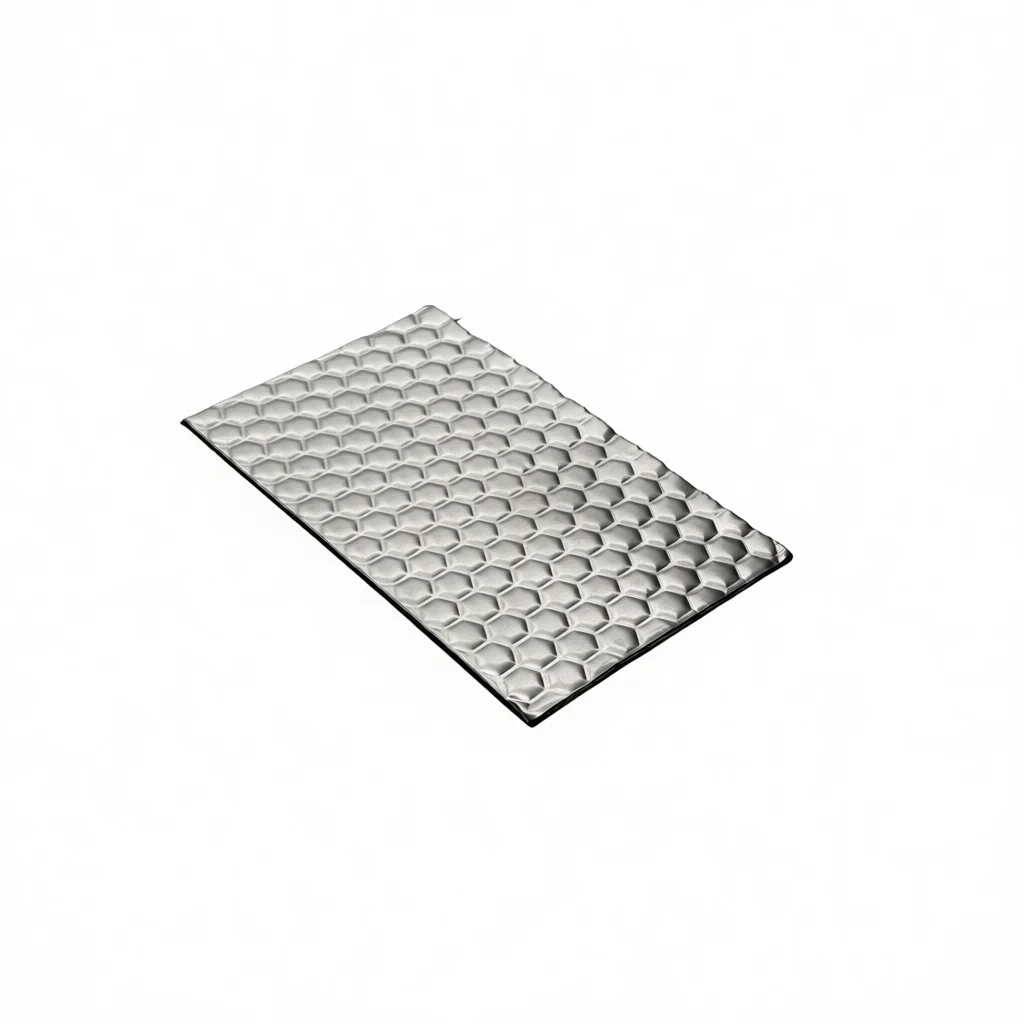
This is where the"Small Product,Big Impact"philosophy becomes a measurable engineering metric.A High-Density Vibration Plate is an active kinetic dampener,not a passive acoustic barrier.At Guangdong Sunlite Science&Technology Co.,Ltd.,we engineer precision IIR(Butyl Rubber)constrained-layer damping composites that aggressively convert mechanical vibration into low-level thermal energy.By altering the resonant frequency of the host material,our plates eliminate structural fatigue and destructive noise directly at the source.
Technical Breakdown:The Science of Viscoelastic Damping
To effectively kill low-frequency resonance,an engineer must apply the principles of Constrained Layer Damping(CLD).A standard unconstrained rubber mat will flex with the metal panel,providing minimal energy dissipation.
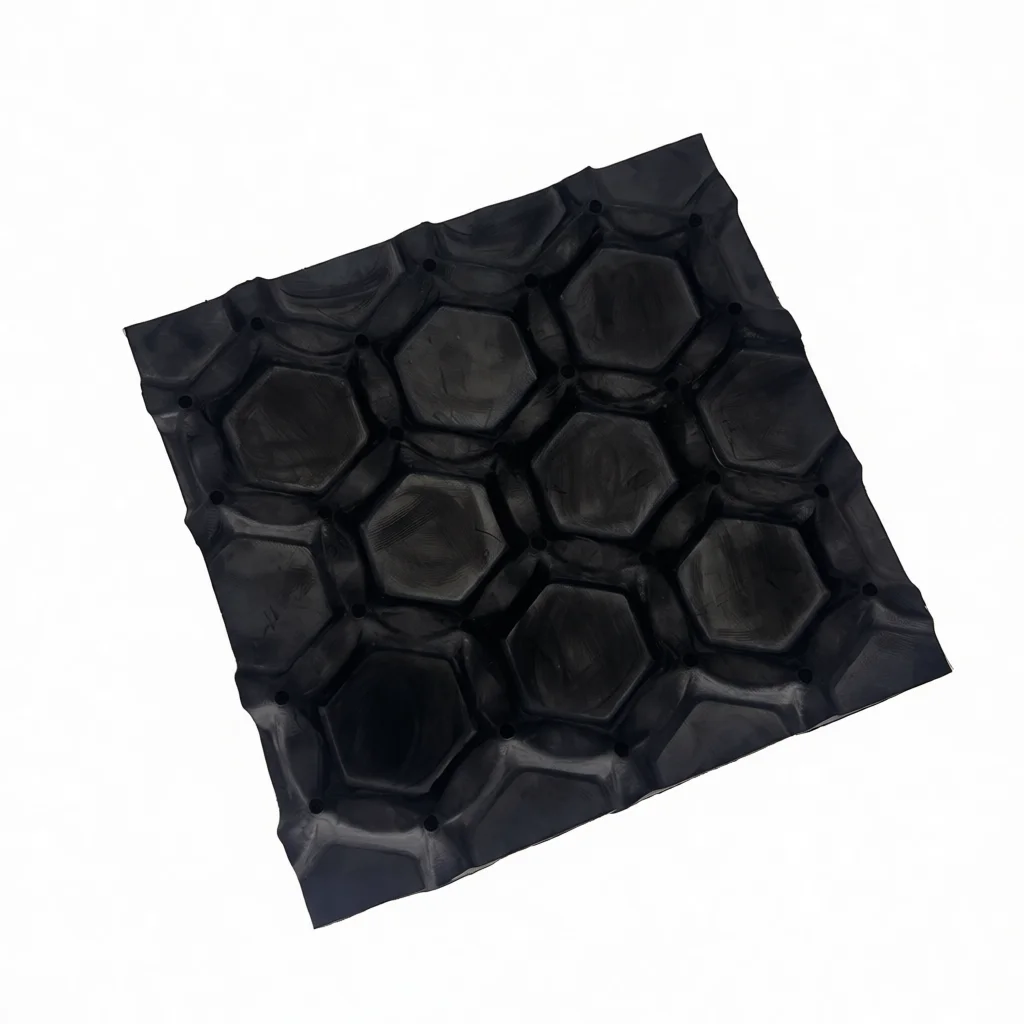
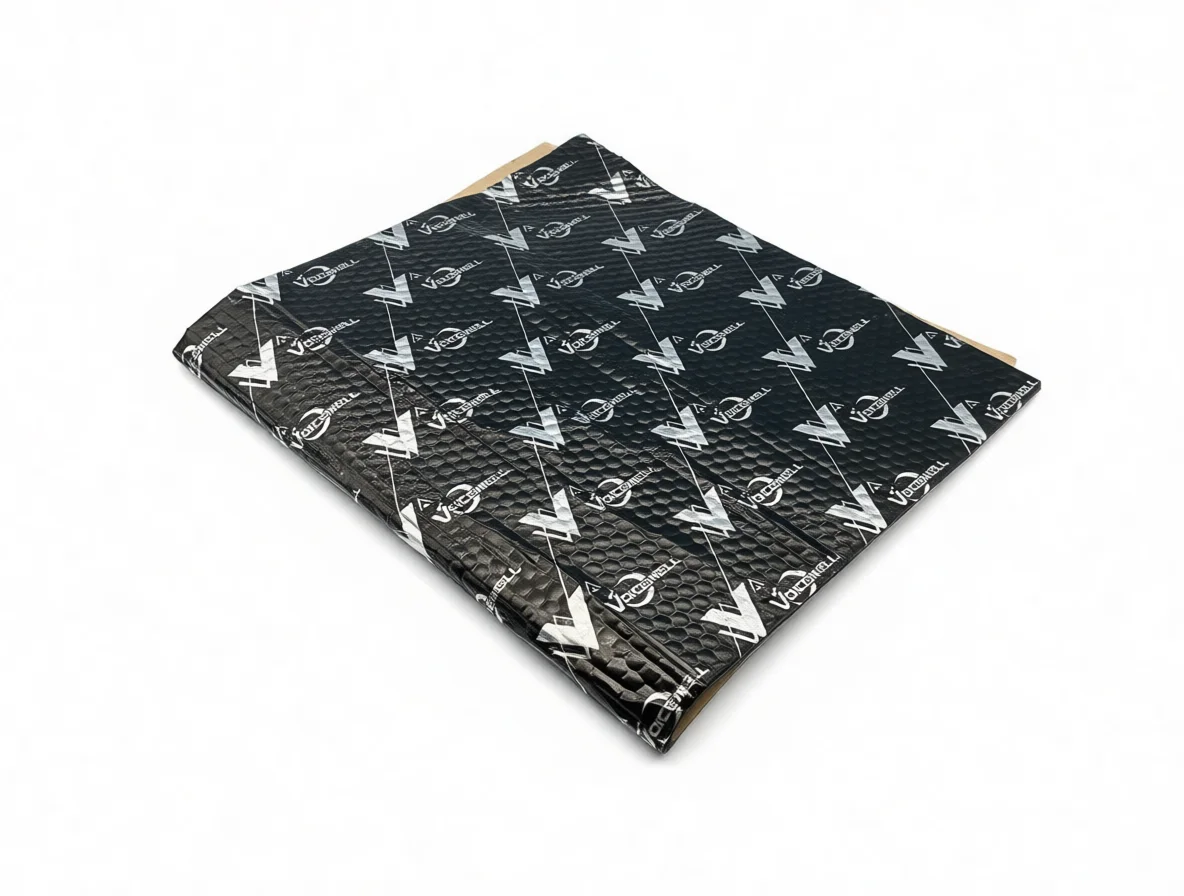
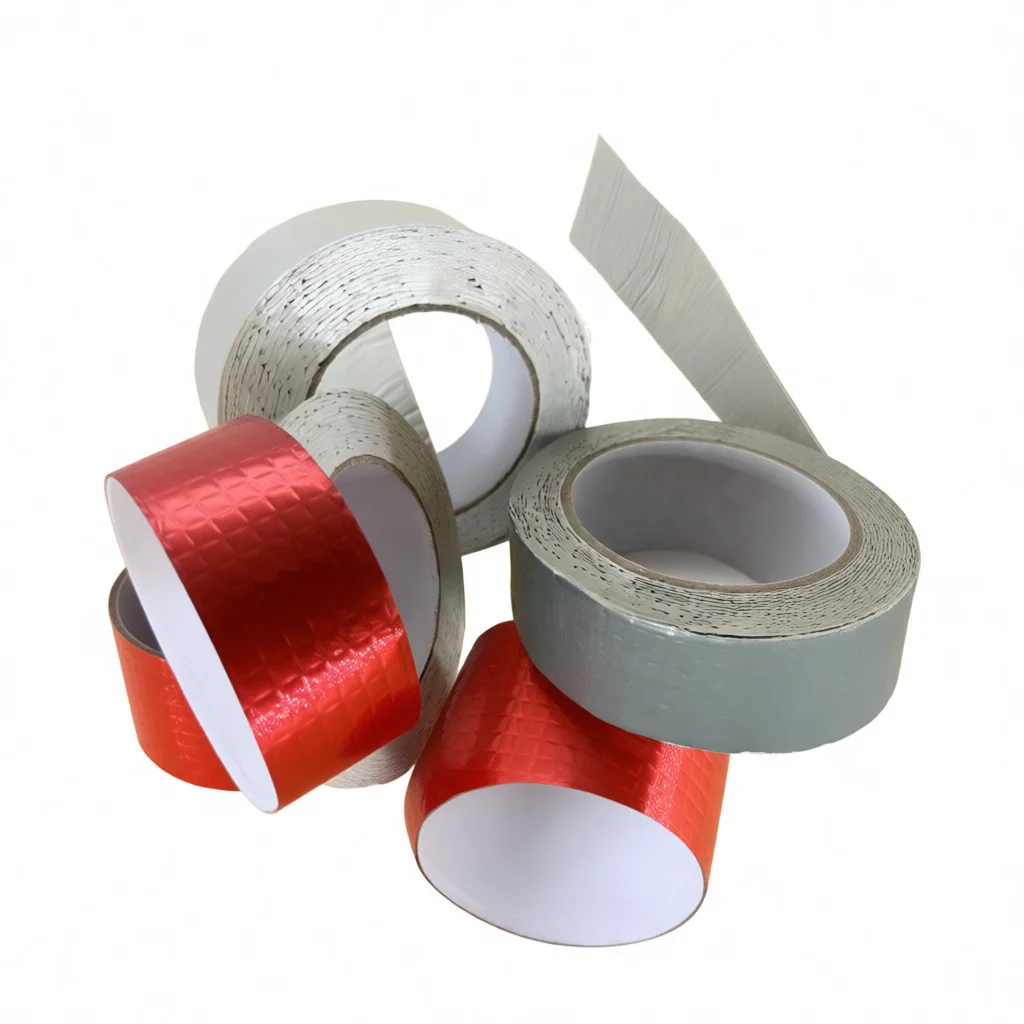
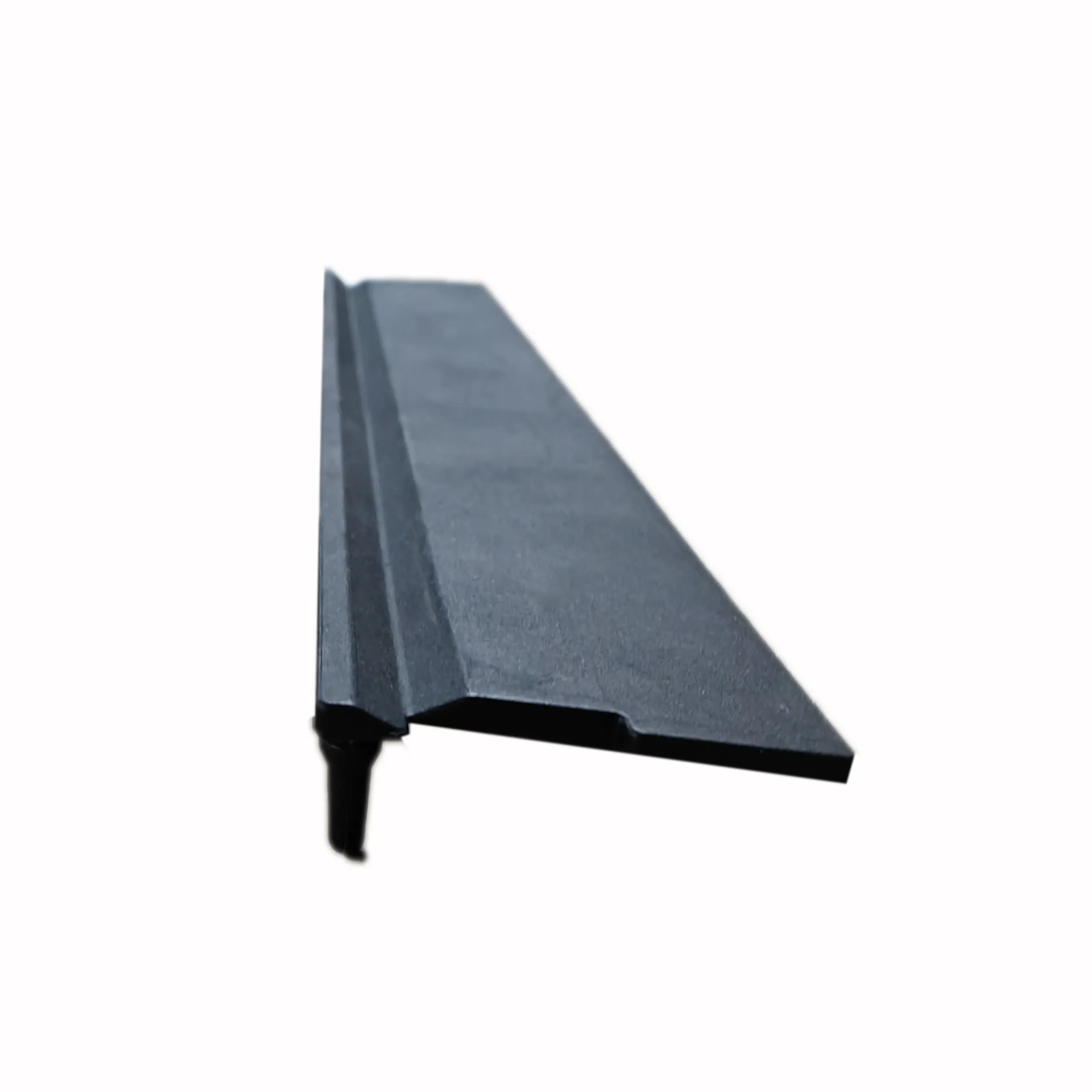
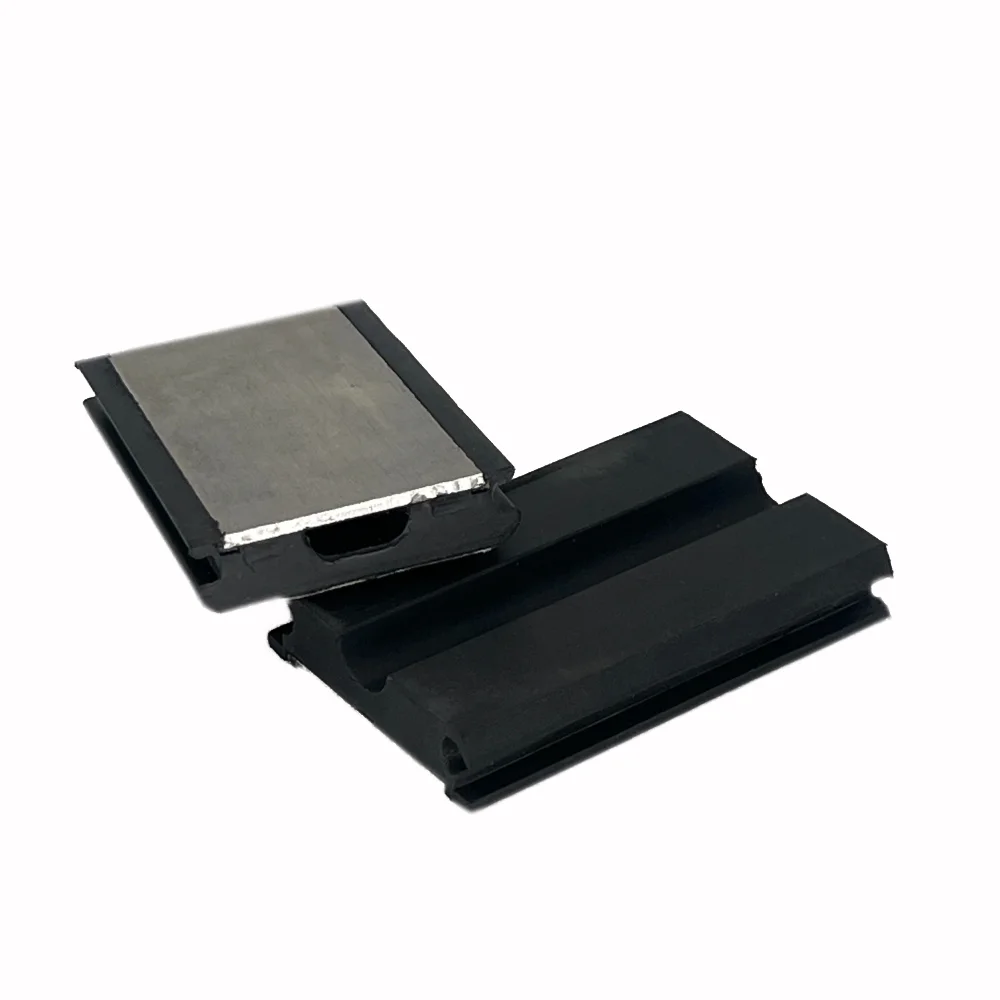
Guangdong Sunlite solves this by engineering a composite structure consisting of a dense,viscoelastic IIR(Isobutylene Isoprene Rubber)base layer fused to a rigid aluminum foil constraining layer.When the underlying sheet metal vibrates,the aluminum layer forces the butyl rubber to undergo extreme shear strain.This shear strain maximizes the hysteresis of the elastomer,rapidly converting the vibrational kinetic energy into heat.With a density of≥2.3 g/cm³and a composite loss factor of≥0.25,our plates provide massive mechanical impedance,instantly deadening panel reverberation.
Performance Comparison:Sunlite IIR Composite vs.Traditional Bitumen
For decades,the automotive and industrial sectors relied on cheap asphalt or bitumen-based pads for mass loading.The engineering data clearly demonstrates why advanced butyl composites are the only viable choice for modern applications.
Engineering Metric | Sunlite High-Density Vibration Plate(IIR) | Traditional Bitumen/Asphalt Pads |
Material Architecture | Viscoelastic Butyl Rubber+Aluminum Foil | Melted Asphalt/Petroleum Byproducts |
Density(Mass Loading) | ≥2.3 g/cm³(Exceptional low-frequency damping) | <1.5 g/cm³(Ineffective for heavy resonance) |
Composite Loss Factor | ≥0.25(High kinetic energy conversion) | <0.10(Poor energy dissipation) |
Operating Temperature Range | -40°C to+80°C | 0°C to+60°C(Melts in heat,embrittles in cold) |
Environmental Stability | Outstanding(Non-hardening,RoHS/REACH compliant) | Poor(Toxic outgassing,dries and cracks over time) |
Real-World Applications:Precision Damping Across Sectors
The application of a High-Density Vibration Plate is critical across several heavy-duty and high-tech sectors where uncontrolled vibration leads to compromised user experience or mechanical failure.
1.Automotive NVH and Electric Vehicle(EV)Acoustics
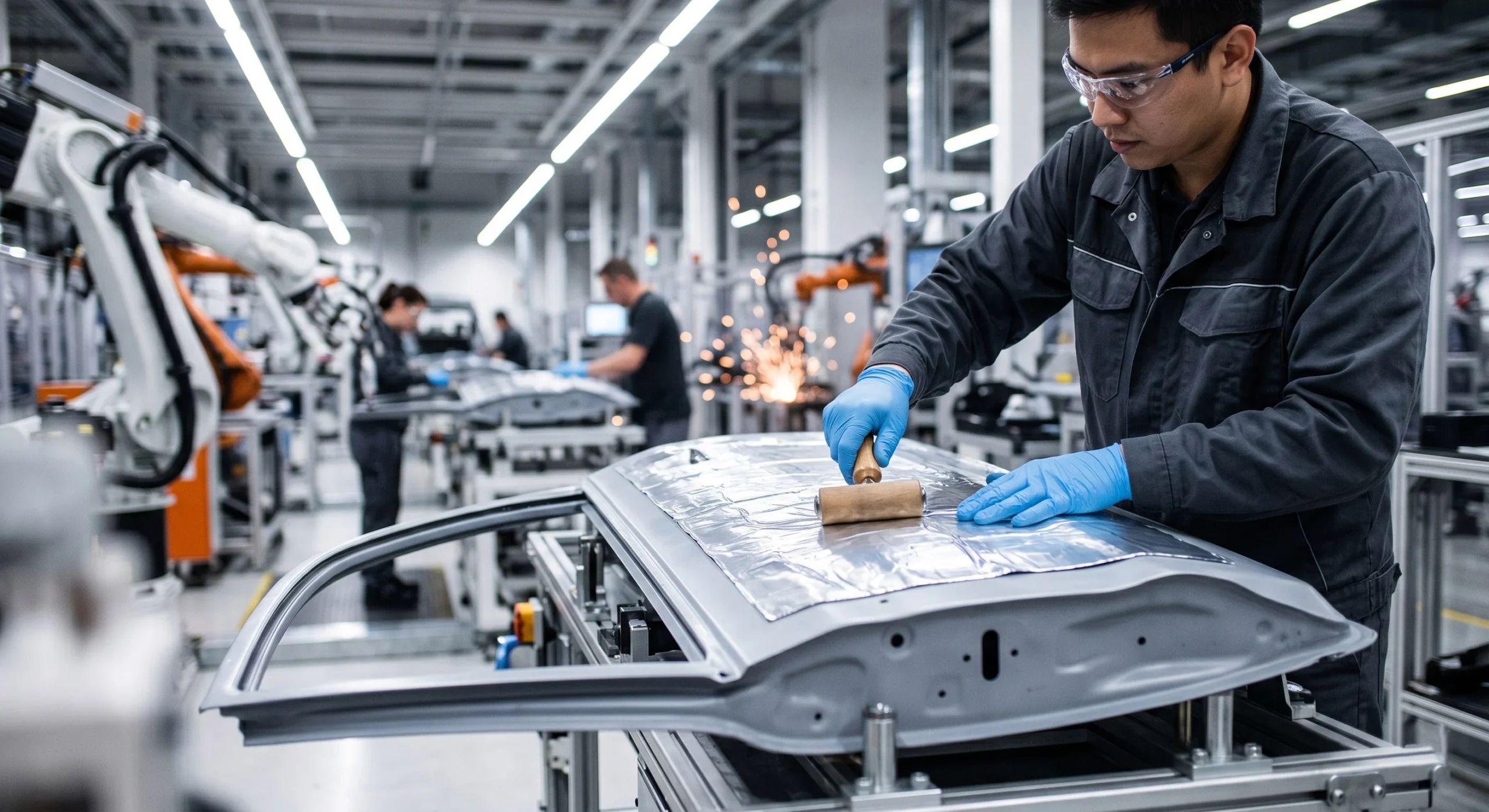
Internal combustion engines naturally mask ambient road noise.However,electric vehicles are virtually silent,making wind sheer and tire resonance highly noticeable to passengers.Applied to the underbody floor,firewalls,and the inner layers of door sheet metal,our IIR plates act as a heavy acoustic barrier.They block tire stone-splash noise,reduce multi-source reverberation,and deliver the premium acoustic quietness(NVH)demanded by the modern automotive market.
2.High-Precision Industrial Machinery
In the world of automated manufacturing,machine tool vibration directly degrades the surface finish tolerances of CNC milled parts.By applying high-density damping plates to the external enclosures and mounting bases of industrial automation systems,engineers can significantly reduce harmonic resonance.This ensures that the cutting tool maintains micron-level accuracy without being disrupted by the vibration of its own coolant pumps or servo motors.
3.Battery Systems and Electronic Enclosures
Heavy machinery and off-road vehicles subject their internal electronics to continuous,high-G mechanical shock.If left unmitigated,these vibrations cause premature failure of solder joints on PCBs and degrade the structural integrity of lithium-ion battery packs.The high load-bearing capacity of our vibration plates ensures that sensitive components are isolated from the chassis,absorbing the kinetic spikes before they reach the fragile electronics.
Total Cost of Ownership(TCO)Analysis:Shifting from Price to Long-Term Stability
A persistent vulnerability in B2B procurement is focusing strictly on the unit price of noise insulation materials.Conducting a Total Cost of Ownership(TCO)analysis reveals that cheap bitumen pads are a massive liability.
When a low-grade asphalt pad hardens,cracks,and detaches inside a car door after two years of temperature cycling,it leaves the metal exposed and falls to the bottom of the door cavity,potentially blocking water drainage holes and causing severe rust.The true cost of this failure includes expensive dealership warranty repairs,negative consumer reviews regarding cabin noise,and extensive brand damage.
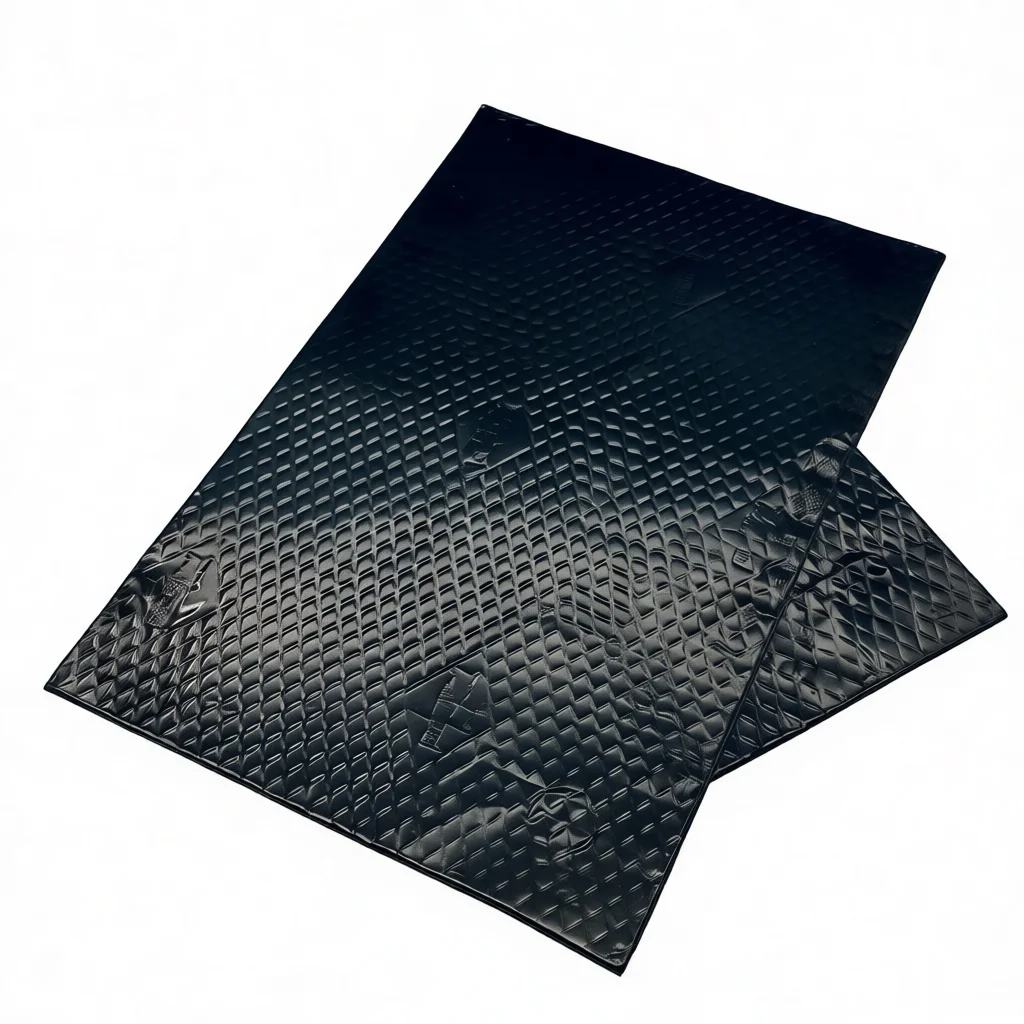
Guangdong Sunlite’s High-Density Vibration Plates feature pressure-sensitive adhesives that provide permanent,long-lasting adherence without off-gassing or oil-seepage.By utilizing our premium IIR composites,manufacturers eliminate post-assembly NVH rework,reduce the long-term mechanical wear on sensitive electronic components,and extend the overall lifecycle of the machinery.Investing in precision damping upfront yields massive dividends by protecting the structural integrity of your core product.
Frequently Asked Questions(Technical FAQs)
What is the composite loss factor of a High-Density Vibration Plate?
Guangdong Sunlite’s high-density plates achieve a composite loss factor of≥0.25.This metric indicates a highly efficient conversion of mechanical vibration into thermal energy,making it vastly superior to standard rubber or acoustic foams for mitigating low-frequency structural resonance.
How does butyl rubber(IIR)compare to traditional asphalt damping pads?
Butyl rubber is completely non-toxic,odorless,and maintains its viscoelastic flexibility across extreme temperature ranges(-40°C to+80°C).Unlike traditional asphalt or bitumen pads,IIR will never melt in the summer heat or become brittle and detach during freezing winters,ensuring a permanent bond to the sheet metal.
Can these vibration plates be customized for complex geometric installations?
Yes.The High-Density Vibration Plate is designed for highly flexible,convenient construction.With a self-adhesive backing and a pliable aluminum constraining layer,it supports free cutting and effortlessly conforms to the complex curved surfaces of automotive wheel hubs,door panels,and tight industrial enclosures.
Secure Your NVH Standards with Precision Engineering
Do not allow uncontrolled acoustic resonance and structural vibration to compromise the quality and longevity of your heavy machinery or automotive designs.The integrity of your kinetic energy management dictates the perceived quality and reliability of your entire platform.
Partner with the experts in advanced elastomer and acoustic science.Contact the engineering team at Guangdong Sunlite Science&Technology Co.,Ltd.today for detailed NVH material selection,custom structural analysis,and to request high-performance IIR composite samples tailored to your exact manufacturing requirements.
In advanced engineering—whether designing the chassis of a next-generation electric vehicle(EV)or the enclosure of a high-speed CNC mill—uncontrolled kinetic energy is a critical structural liability.