

 Select Language
I. Definition and Core Properties
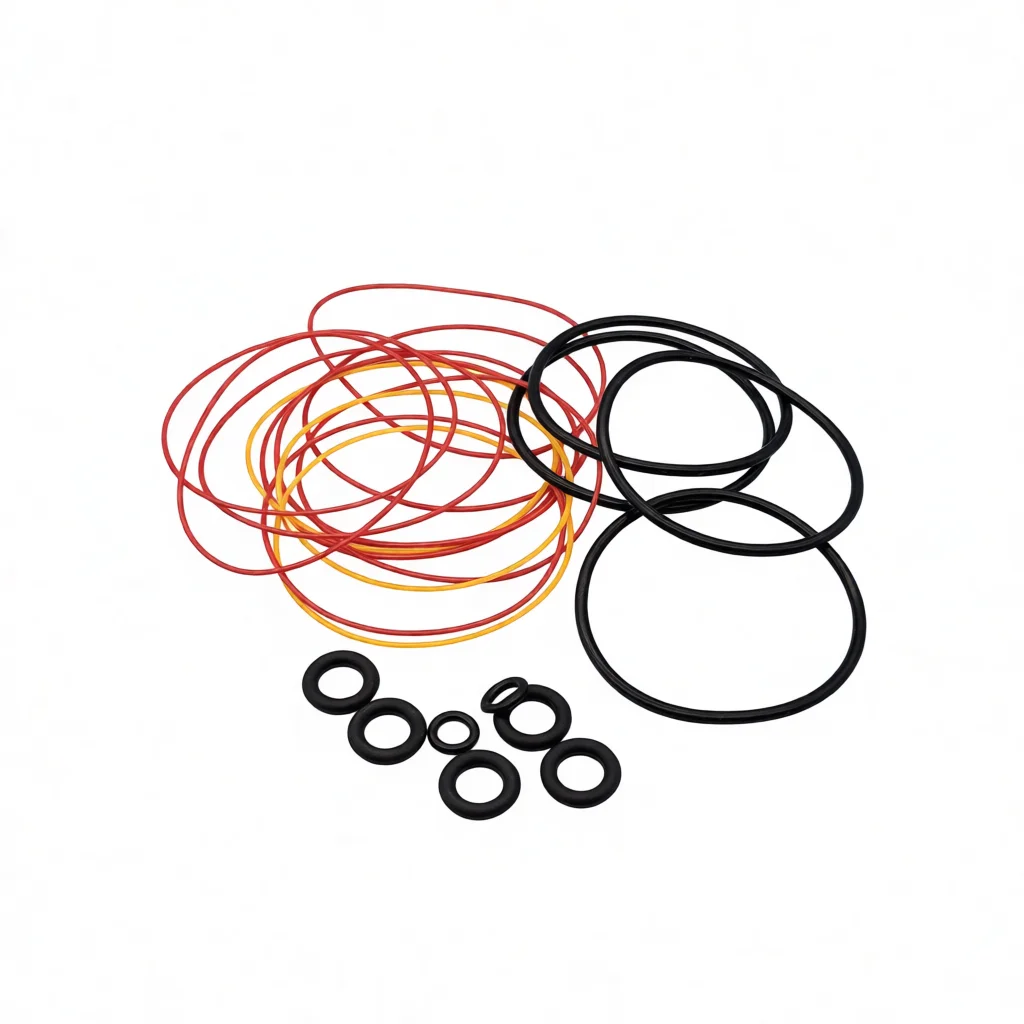
Special-medium-resistant elastomers are a class of high-performance polymers capable of maintaining stability within a temperature range of -60 °C to 300 °C, while resisting corrosion from more than 300 types of chemicals including acids, alkalis, oils, and alcohols. Their uniqueness lies in:
Chemical Inertness: The C–F bond energy in a fluoroelastomer matrix reaches 485 kJ/mol—1.5 times that of the typical C–C bond in conventional rubbers.
Temperature Adaptability: Through siloxane backbone modification, the glass transition temperature can be reduced to as low as -120 °C.
Structural Stability: When the crosslink density reaches 10^-4 mol/cm³, the swelling ratio can be controlled within 5%.
II. Key Technological Breakthroughs
Modern manufacturing adopts a “matrix–filler–functional group” integrated approach:
Matrix Selection: Fluoroelastomers (FKM) are suitable for strong acid environments, while hydrogenated nitrile rubber (HNBR) exhibits superior resistance to oil-based media.
Nano Reinforcement: Incorporating 20 nm fumed silica can enhance tensile strength by up to 300%.
Functional Modification: Introducing perfluoroalkyl ether side chains increases surface hydrophobicity, achieving a contact angle of up to 110°.
III. Typical Application Scenarios
Aerospace: Rocket fuel seals must endure nitrogen tetroxide, a highly corrosive oxidizer.
Agricultural Drones: Tank sealing materials must resist degradation from organophosphate pesticides.
Submarine Cables: The water-blocking layer in three-layer co-extruded structures must withstand long-term seawater immersion.
Chemical Pipelines: Hoses transporting 98% concentrated sulfuric acid can achieve service lives up to eight times longer than those made of conventional rubber.
IV. Future Development Trends
Recent studies by the Chinese Academy of Sciences show that graphene/fluoroelastomer composites can improve wear resistance by up to 17 times. By 2024, the domestic market size has reached 8.5 billion RMB, with an annual growth rate steady at over 12%. With increasing environmental demands, biodegradable medium-resistant elastomers are expected to become the next research focus.
For more technical consultation, please contact Mr. Tang at Xinli Technology: +86 13825745676.
Special-medium-resistant elastomers are a class of high-performance polymers capable of maintaining stability within a temperature range of -60 °C to 300 °C, while resisting corrosion from more than 300 types of chemicals including acids, alkalis, oils, and alcohols.