The world is increasingly reliant on remote monitoring and inspection, particularly in hazardous or inaccessible environments. A tracked inspection robot offers a robust and reliable solution, bridging the gap between human limitations and the need for thorough data collection. These robots are becoming indispensable across diverse sectors, impacting safety, efficiency, and cost-effectiveness globally.
The growing complexity of infrastructure, from oil and gas pipelines to nuclear power plants, demands advanced inspection techniques. Traditional methods often involve manual labor in dangerous conditions or are simply impractical. This is where the tracked inspection robot shines, providing a safe, consistent, and repeatable means of gathering critical data. The demand for these robots is accelerating, driven by stringent regulatory requirements and a push for preventative maintenance.
Furthermore, the advancements in robotics, artificial intelligence, and sensor technology are converging to create increasingly sophisticated tracked inspection robots. These systems are no longer simply remote-controlled vehicles; they're capable of autonomous navigation, real-time data analysis, and predictive maintenance, fundamentally changing how industries approach asset management.
Introduction to Tracked Inspection Robots
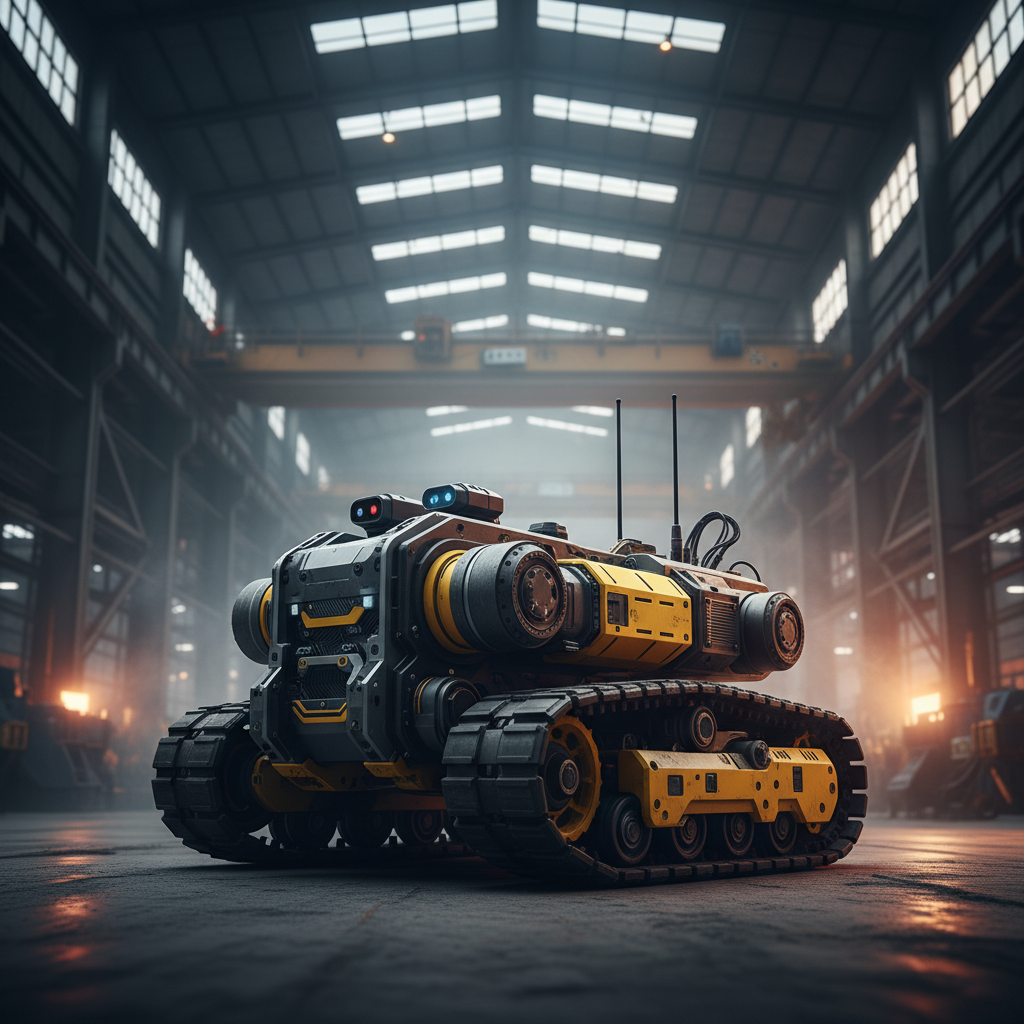
Tracked inspection robots are mobile robotic systems designed for autonomous or remotely operated inspection tasks in challenging terrains and environments. Unlike wheeled robots, their tracked design provides superior traction and stability, enabling them to navigate obstacles like stairs, uneven surfaces, and debris. This makes them ideal for inspecting infrastructure such as pipelines, bridges, and confined spaces.
The primary goal of deploying a tracked inspection robot is to reduce risk to human inspectors and improve the accuracy and efficiency of data collection. These robots are equipped with various sensors – cameras, thermal imagers, gas detectors, and more – to provide comprehensive assessments of asset conditions. This proactive approach helps prevent costly failures and ensures operational safety.
Defining Tracked Inspection Robots
At its core, a tracked inspection robot is a remotely or autonomously operated vehicle utilizing a tracked locomotion system. This system, inspired by tanks and construction equipment, distributes the robot's weight over a larger surface area, providing excellent grip and enabling it to traverse difficult terrain. These robots are distinct from aerial drones and wheeled robots, offering a unique blend of accessibility and stability.
The application of these robots extends beyond simple visual inspection. Modern tracked inspection robots integrate with sophisticated data analytics platforms, allowing for real-time condition monitoring, defect detection, and predictive maintenance. They represent a paradigm shift in how industries approach asset integrity management, moving from reactive repairs to proactive prevention.
Ultimately, a tracked inspection robot is a tool designed to enhance safety, improve efficiency, and reduce costs associated with infrastructure inspection. They’re a critical component of modern industrial and public safety strategies.
Key Components and Features
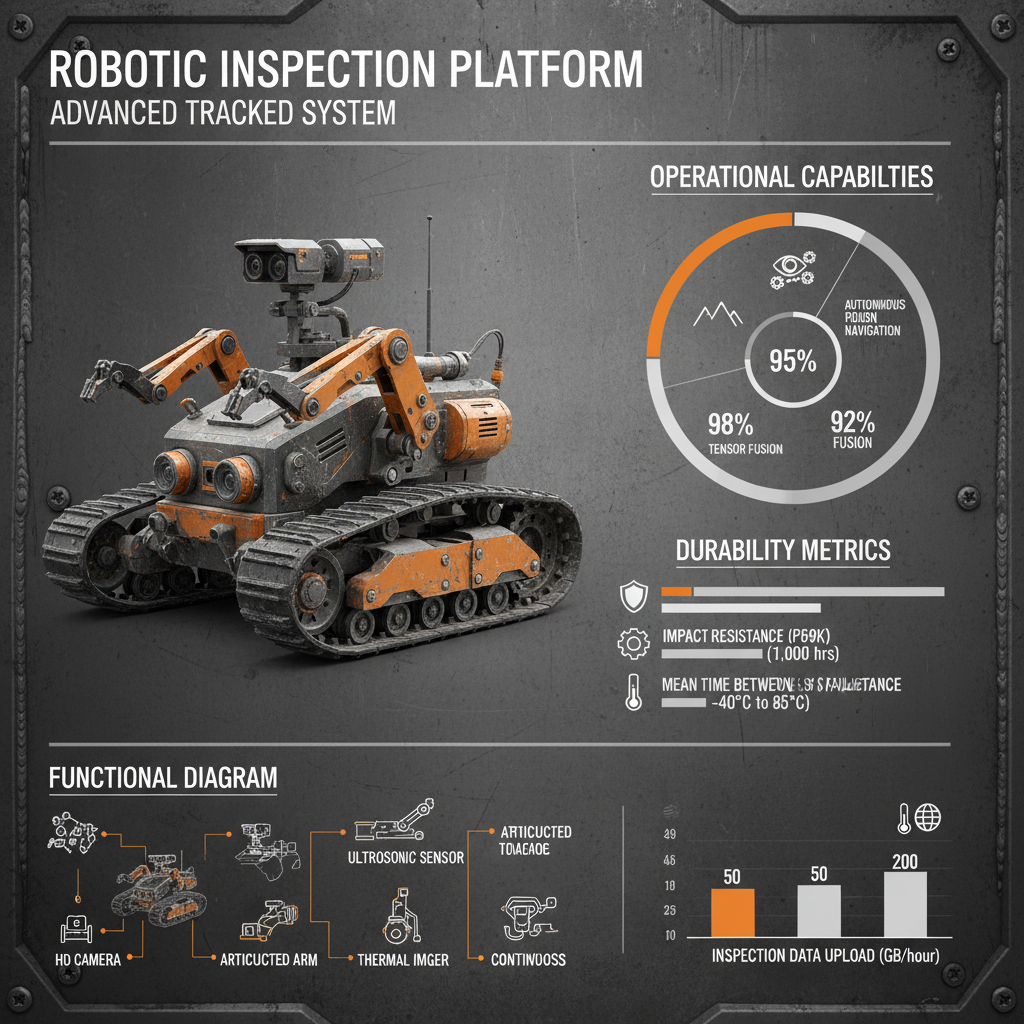
The effectiveness of a tracked inspection robot relies on a combination of key components. Firstly, the robust tracked chassis provides the mobility and stability required for navigating challenging environments. Secondly, a suite of integrated sensors – including high-resolution cameras, thermal imagers, and potentially gas detectors – captures critical data.
Furthermore, advanced control systems are essential. These can range from simple remote operation via a joystick to fully autonomous navigation utilizing SLAM (Simultaneous Localization and Mapping) algorithms and artificial intelligence. Effective communication systems, enabling real-time data transmission, are also crucial. Finally, a reliable power source, often a long-lasting battery pack, is paramount for extended operational durations.
The integration of these components determines the robot's overall capability and its suitability for specific inspection tasks. Considerations include payload capacity, operating range, environmental resistance, and the level of autonomy required for the application.
Global Applications and Industries Served
The versatility of tracked inspection robots allows for applications across a broad spectrum of industries. In the oil and gas sector, these robots are deployed for pipeline inspection, tank monitoring, and confined space entry, reducing risk to personnel and ensuring asset integrity. The power generation industry utilizes them for inspecting nuclear reactors, turbines, and substations.
Beyond energy, tracked inspection robots are increasingly common in infrastructure inspection, assessing bridges, tunnels, and dams for structural defects. In security and defense, they are used for perimeter surveillance, reconnaissance, and bomb disposal. Additionally, disaster response teams leverage their capabilities for search and rescue operations and damage assessment in hazardous environments.
Geographically, the demand for these robots is widespread. North America and Europe are early adopters, driven by stringent safety regulations and aging infrastructure. However, rapid industrialization in Asia-Pacific, particularly in China and India, is driving significant growth in the market. Countries in the Middle East also represent a substantial market, fueled by large-scale infrastructure projects and the need for reliable asset monitoring.
Tracked Inspection Robot Performance Metrics
Advantages and Long-Term Value Proposition
The advantages of implementing a tracked inspection robot are multifaceted. Primarily, they significantly enhance worker safety by removing humans from dangerous inspection tasks. This reduces the risk of accidents and associated liabilities. Furthermore, robotic inspections are often more thorough and consistent than manual inspections, leading to more accurate data.
The long-term value proposition extends beyond immediate safety and accuracy gains. Predictive maintenance, enabled by continuous data collection, minimizes downtime and reduces repair costs. Increased efficiency translates to significant cost savings, while improved asset integrity extends the lifespan of critical infrastructure. These benefits contribute to a stronger return on investment and a more sustainable operational model.
Future Trends and Technological Advancements
The future of tracked inspection robots is poised for rapid innovation. Advancements in artificial intelligence (AI) and machine learning (ML) will enable robots to perform more complex tasks autonomously, including defect recognition and root cause analysis. Integration with digital twin technology will allow for virtual simulations and predictive modeling, optimizing inspection strategies.
Furthermore, the development of more advanced sensor technologies, such as hyperspectral imaging and LiDAR, will provide even more detailed and comprehensive data. Sustainable power solutions, including fuel cells and solar charging, will extend operational durations and reduce environmental impact. These trends will collectively lead to more intelligent, efficient, and environmentally friendly inspection systems.
Challenges and Potential Solutions
Despite their numerous advantages, tracked inspection robots face certain challenges. One key limitation is the complexity of navigating highly cluttered or unstructured environments. Improving path planning algorithms and incorporating more sophisticated obstacle avoidance systems are crucial for addressing this issue.
Another challenge lies in ensuring reliable communication in remote or underground locations. Developing robust wireless communication protocols and utilizing mesh networking technologies can improve connectivity. Finally, the high upfront cost of these systems can be a barrier to adoption. Promoting standardization and exploring leasing models can make them more accessible to a wider range of industries.
Summary of Tracked Inspection Robot Challenges & Solutions
| Challenge |
Impact on Operations |
Potential Solution |
Implementation Cost (Scale 1-10) |
| Navigating Cluttered Environments |
Reduced Inspection Coverage |
Advanced Path Planning Algorithms |
6 |
| Limited Communication Range |
Real-Time Data Loss |
Mesh Networking Systems |
7 |
| High Initial Investment |
Barrier to Adoption |
Leasing or Service Models |
4 |
| Sensor Data Interpretation |
False Positives/Negatives |
AI-Powered Data Analytics |
8 |
| Battery Life Limitations |
Reduced Operational Time |
Advanced Battery Technologies |
5 |
| Environmental Resilience |
Damage to Robot Components |
Ruggedized Design & Materials |
6 |
FAQS
Tracked inspection robots significantly enhance safety by removing human inspectors from hazardous environments such as confined spaces, areas with toxic gases, or structurally unstable infrastructure. This minimizes the risk of accidents, injuries, and fatalities. They can operate in conditions that are simply too dangerous for humans, ensuring a safer working environment and reducing liability for organizations.
Typically, tracked inspection robots are equipped with a versatile suite of sensors. These commonly include high-resolution cameras for visual inspection, thermal imagers for detecting temperature anomalies, gas detectors for identifying hazardous gas leaks, LiDAR for creating 3D maps, and potentially ultrasonic sensors for non-destructive testing. The specific sensor configuration depends on the intended application.
The cost of a tracked inspection robot varies widely depending on its capabilities, size, sensor suite, and level of autonomy. Basic models can start around $50,000, while more advanced systems with sophisticated sensors and autonomous navigation can cost upwards of $250,000 or more. Leasing and service models are also available to reduce upfront investment.
The level of training required varies depending on the complexity of the robot. Basic remote operation typically requires a few days of training, while operating autonomous systems and performing maintenance may necessitate more extensive training programs. Vendors like SunliteTek often provide comprehensive training packages to ensure effective operation and maintenance.
Tracked inspection robots are generally built to withstand harsh environments. They are typically designed to be resistant to dust, water, and extreme temperatures. Many models are also shockproof and can operate in corrosive environments. However, the specific durability and environmental resistance depend on the robot's design and materials.
Battery life varies significantly based on the robot's size, power consumption, and operating conditions. Typical battery life ranges from 2 to 8 hours. Advanced robots may utilize swappable battery packs or even tethered power solutions for extended operation. The trend is towards longer-lasting and faster-charging battery technologies.
Conclusion
In conclusion, the tracked inspection robot represents a transformative technology with the potential to revolutionize infrastructure inspection and asset management. By enhancing safety, improving efficiency, and reducing costs, these robots deliver significant value across diverse industries. Their ability to navigate challenging terrains and collect critical data makes them indispensable tools for modern industrial operations.
Looking ahead, continued innovation in AI, sensor technology, and power systems will further expand the capabilities of tracked inspection robots. Embracing these advancements is crucial for organizations seeking to optimize their operations, ensure asset integrity, and protect their workforce. Investing in these technologies is not just a matter of efficiency; it's a commitment to safety, sustainability, and long-term resilience.

 Select Language