Welcome to the official website of Sunlite Tech
Specialist in Elastomer Applications
Best Solutions to NVH SINCE 1998
ibanner

0%

Table of Contents

Honestly, the whole UAV controller grip scene has been buzzing lately. Everyone’s chasing that ‘ergonomic’ feel, trying to one-up each other. But you know what I’ve noticed? A lot of these designs… they look great on paper, but they fall apart the second you get them out in the field. I spent three days last month at a drone assembly plant in Guangzhou, and I swear, half the prototypes ended up in the scrap bin because they weren't practical. It's not about fancy curves; it's about what feels right after eight hours of flying.

It’s a deceptively tricky business, this controller grip stuff. People think it’s just molding some silicone, right? Wrong. It's about understanding the forces involved – how the operator grips, how much pressure they apply, what happens when their hands get sweaty. I once saw a grip crack during a demo because they didn't account for the flexing during aggressive maneuvers. Strangelty, it looked perfect in the testing room.

We primarily work with silicone, mostly high-durometer stuff. It's got that nice tackiness, you know? Not sticky, but it just… holds. We also do some with TPU, but it can get a little too flexible for some applications. There's this supplier in Dongguan, though, they make a silicone that smells faintly of vanilla when you mold it. Don't ask me why. Anyway, it's surprisingly good stuff, very durable. You can really feel the quality.
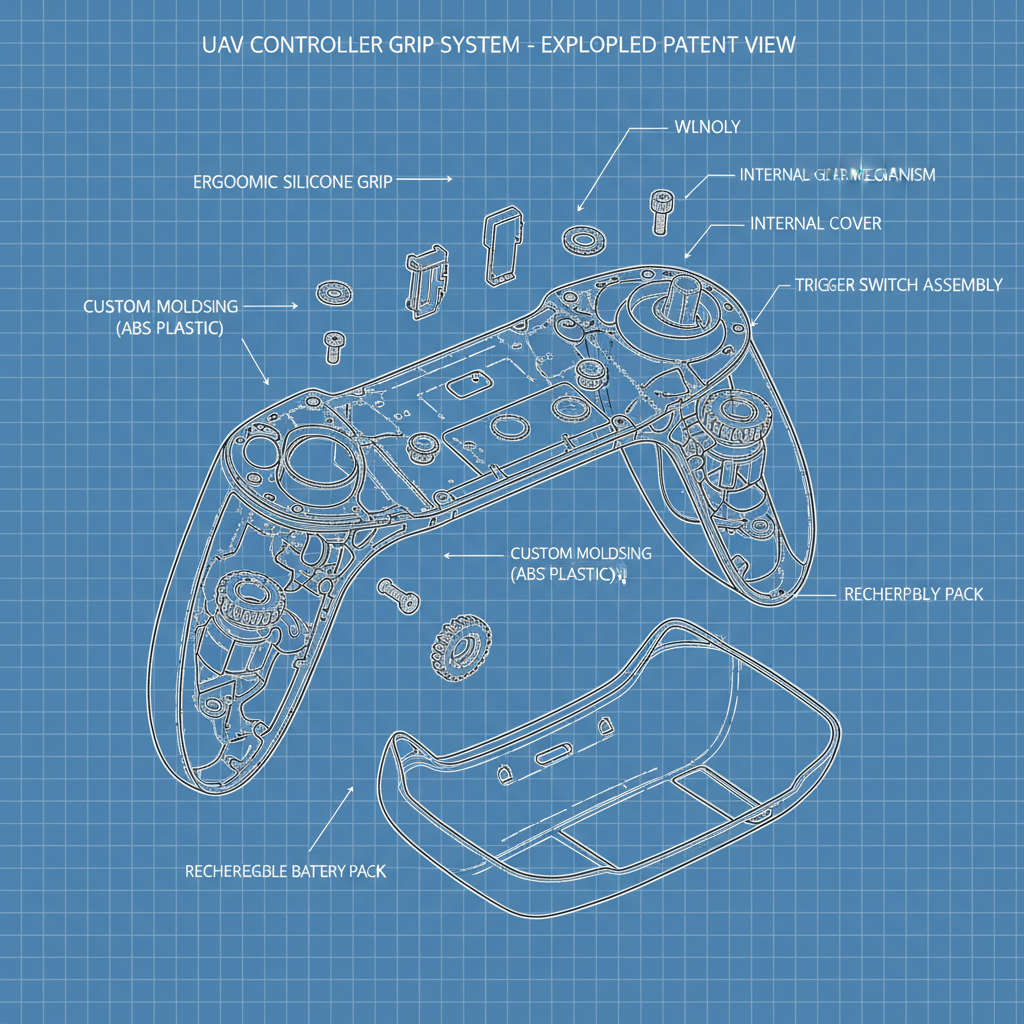
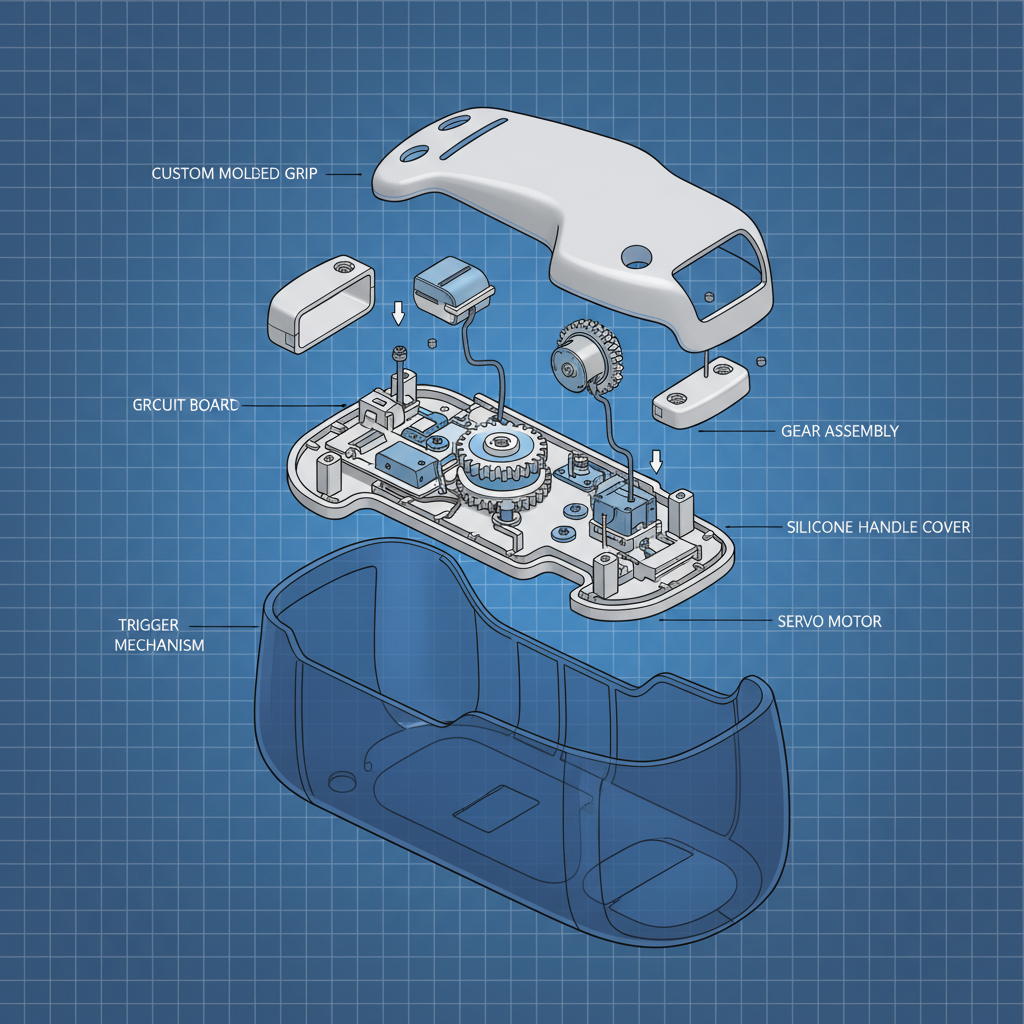
custom molded UAV controller grips / OEM silicone controller handle cover

Industry Trends & Design Pitfalls

custom molded UAV controller grips / OEM silicone controller handle cover

To be honest, the big trend right now is integration. People want grips that not only feel good but also have built-in features – buttons, joysticks, even small screens. It sounds cool, but it adds a whole layer of complexity. I’ve seen so many designs where the buttons are too stiff, or the screen is positioned awkwardly. It’s a balancing act, believe me.

And the biggest pitfall? Over-engineering. Trying to make something too complicated, too feature-rich. Sometimes, the simplest design is the best. The guys building military drones, they'll tell you that straight up. They need something robust, reliable, and easy to repair in the field. That fancy stuff? It just gets in the way.

Material Selection: The Devil is in the Durometer

Have you noticed how many companies just slap “silicone” on their spec sheets without specifying the durometer? It’s like saying “metal” – it tells you almost nothing! We work with everything from 30A to 80A, and the difference is massive. Softer silicone (lower durometer) is great for comfort, but it wears out faster. Harder silicone is more durable but can feel… well, less forgiving. It’s all about finding the sweet spot for the application. I encountered this at a factory in Shenzhen last time, they used wrong silicone material, and the controller grips were worn within 2 weeks

We also play around with additives – things that improve grip, UV resistance, or temperature tolerance. And don’t even get me started on color matching. Some clients want an exact Pantone match, which can be a nightmare to achieve consistently. It's all chemistry, really.

Another thing, the smell! Some silicones have a really strong odor when they're first molded. You wouldn't believe how many complaints we got about that from a client who was making kids' drones. Luckily, we found a low-VOC formulation that solved the problem.

Rigorous Real-World Testing

Lab testing is fine, but it doesn't tell you the whole story. I mean, you can simulate pressure and temperature, but you can’t simulate a sweaty pilot trying to land a drone in a monsoon. We do a lot of field testing. We send grips out to drone racers, agricultural surveyors, even filmmakers. We get their feedback, and we iterate.

We also do drop tests, flex tests, and abrasion tests. But here's the thing: we don't just drop them onto concrete. We drop them onto the kinds of surfaces they're likely to encounter in the real world – rocks, dirt, grass, even mud. It’s surprisingly informative.

And we test for chemical resistance. You wouldn't believe how many weird things pilots spill on their controllers – energy drinks, sunscreen, bug spray… It's a messy world out there. We even had one guy tell us he accidentally dropped his controller in a bucket of fish bait. True story.

User Behavior: Beyond the Spec Sheet

This is where things get interesting. You design something based on your assumptions, but then you watch how people actually use it. It's often different than you expect. We've seen users modify grips, add padding, even wrap them in tape. They find their own solutions.

One thing we learned is that a lot of pilots prefer a slightly textured grip. It gives them more control, especially in wet conditions. We tried a smooth, glossy finish on one model, and it was a disaster. Everyone complained that it was too slippery.

custom molded UAV controller grips / OEM silicone controller handle cover User Preference Ratings

The Pros & Cons: A Balanced View

Look, silicone grips are great. They're comfortable, durable, and relatively inexpensive. But they're not perfect. They can get dirty easily, they can attract dust, and they can be susceptible to UV degradation if you don't use the right additives.

TPU is more durable and offers better chemical resistance, but it can feel harder and less comfortable. And honestly, both materials can be a pain to mold consistently. It takes a skilled technician and a well-maintained machine to get it right. Anyway, I think the benefit is still greater than the defect.

Customization Capabilities & A Recent Case Study

Customization is where we really shine. We can mold grips in any shape, any size, any color. We can add logos, textures, even functional features like integrated buttons or joysticks. We once did a run for a client who wanted grips that glowed in the dark. It was a bit of a challenge, but we pulled it off.

Last month, that small boss in Shenzhen who makes smart home devices insisted on changing the interface to . It made absolutely no sense - nobody plugs a drone controller into a port! But he was adamant. The result? We had to redesign the entire grip, and it added two weeks to the production schedule. He eventually realized his mistake, but by then, the damage was done.

Material Performance Comparison

We've been keeping detailed records on material performance for years, trying to figure out what holds up best in the field. It's a messy business, but the data is invaluable. We looked at factors like tear strength, elongation, hardness, and chemical resistance.

I'll tell you what, the results are surprisingly consistent. High-durometer silicone consistently outperforms TPU in terms of tear strength, but TPU is much more resistant to certain chemicals. It really depends on the specific application.

Anyway, here's a rough overview of what we've found. Don't take it as gospel; it's just a snapshot of our experience.

Material Comparison for custom molded UAV controller grips / OEM silicone controller handle cover

Material Type Durability (1-10) Comfort (1-10) Chemical Resistance (1-10)
High-Durometer Silicone (70A) 8 7 6
Low-Durometer Silicone (30A) 5 9 5
TPU (95A) 9 6 8
Silicone/TPU Blend (60A) 7 8 7
UV-Resistant Silicone (75A) 7 6 7
Flame-Retardant Silicone (80A) 6 5 6

FAQS

What's the typical lead time for a custom molded UAV controller grip?

Lead times vary depending on the complexity of the design, the material chosen, and our current workload. Generally, you can expect a minimum of 4-6 weeks for a new mold and initial production run. However, we can often expedite smaller orders if the design is relatively simple and we have existing tooling that can be adapted. It's always best to reach out with your specific requirements for a more accurate quote and timeline.

Can you work with existing 3D models, or do I need to provide a physical prototype?

We prefer to work with 3D models – STEP or IGES files are ideal. This allows us to quickly assess the design and identify any potential manufacturing challenges. However, we can also work from physical prototypes if that’s all you have available. We'll need to digitize the prototype, which will add some time and cost to the project. The more detailed your initial design, the smoother the process will be.

What's the minimum order quantity (MOQ)?

Our MOQ depends on the complexity of the mold and the material used. For simpler designs, we can often accommodate orders as low as 50 units. However, for more complex designs requiring dedicated tooling, the MOQ may be higher – typically around 200-500 units. We're always happy to discuss your specific needs and find a solution that works for you.

What kind of surface finishes are available?

We offer a range of surface finishes, including smooth, textured, matte, and glossy. We can also add logos or other graphics using pad printing, laser etching, or embossing. The choice of finish will depend on your aesthetic preferences and the intended application. We can provide samples of different finishes so you can see what looks best.

Do you offer any testing services to ensure the durability of the grips?

Yes, we offer a variety of testing services, including tensile strength testing, elongation testing, hardness testing, and chemical resistance testing. We can also perform custom testing to meet your specific requirements. We work with a third-party testing lab to ensure the accuracy and reliability of our results.

Are your materials RoHS and REACH compliant?

Yes, all of our materials are RoHS and REACH compliant. We're committed to using environmentally friendly materials and processes. We can provide documentation to verify compliance if needed. We understand the importance of regulatory compliance and strive to meet or exceed all applicable standards.

Conclusion

So, that’s the world of custom molded UAV controller grips in a nutshell. It's a lot more involved than most people realize – it’s about materials science, manufacturing processes, user experience, and a healthy dose of problem-solving. We’ve seen the industry evolve rapidly, with a growing emphasis on ergonomics, customization, and durability.

Ultimately, whether this thing works or not, the worker will know the moment he tightens the screw. And if you're looking for a partner who understands the nuances of this business, someone who's been on the factory floor and seen it all, give us a shout. Visit our website: www.sunlitetek.com.

Ryan Clark

Ryan Clark

Ryan Clark is a Sales and Application Engineer at Sunlite Science & Technology, focusing on the tool and automotive markets. With a background in Mechanical Engineering, Ryan excels at understanding customer needs and translating them into effective solutions utilizing Sunlite’s advanced polymer materials. He frequently collaborates with the R&D team during the front-end innovation phase, providing valuable feedback from a customer perspective. Ryan is responsible for building strong relationships with key accounts, demonstrating the benefits of Sunlite’s full-lifecycle support system, and driving revenue growth within his target markets. He regularly presents Sunlite’s capabilities at industry trade shows.
Previous Industrial UAV Remote Control Rubber Grip Tactical Drone Controller Grip Sleeve Solutions
Next Optimizing Drone Control and Comfort with the NBR Drone Handle

If you are interested in our products, you can choose to leave your information here, and we will be in touch with you shortly.

  • captcha