Welcome to the official website of Sunlite Tech
Specialist in Elastomer Applications
Best Solutions to NVH SINCE 1998
ibanner

0%

Table of Contents

Look, I've been running around construction sites all year, dealing with dust and dirt, and honestly, the biggest buzz right now is about getting everything customized. Everyone wants something unique, something *theirs*. It’s not enough to just buy a part anymore. It’s gotta fit their exact needs, their specific project. And that, my friends, is where things get…interesting.

Have you noticed how everyone's chasing “lightweight” and “high-strength”? Seems simple, right? Wrong. So many designs fall into the trap of trying to do both without really understanding the trade-offs. You end up with something that looks good on paper but snaps like a twig the minute you put any real stress on it. It's happened to me more times than I care to admit.

We’re using a lot more of this TPU these days – thermoplastic polyurethane. It’s… weird. Smells a bit like burnt rubber when you first cut it, but it’s incredibly durable and flexible. Feels different from traditional rubber, less… squishy. You gotta wear gloves when you handle it though, gets sticky. And then there’s the silicone, of course. That stuff is everywhere. It’s surprisingly heavy, actually. I encountered this at a factory in Ningbo last time, they were using it for seals, and the weight was causing issues with assembly.
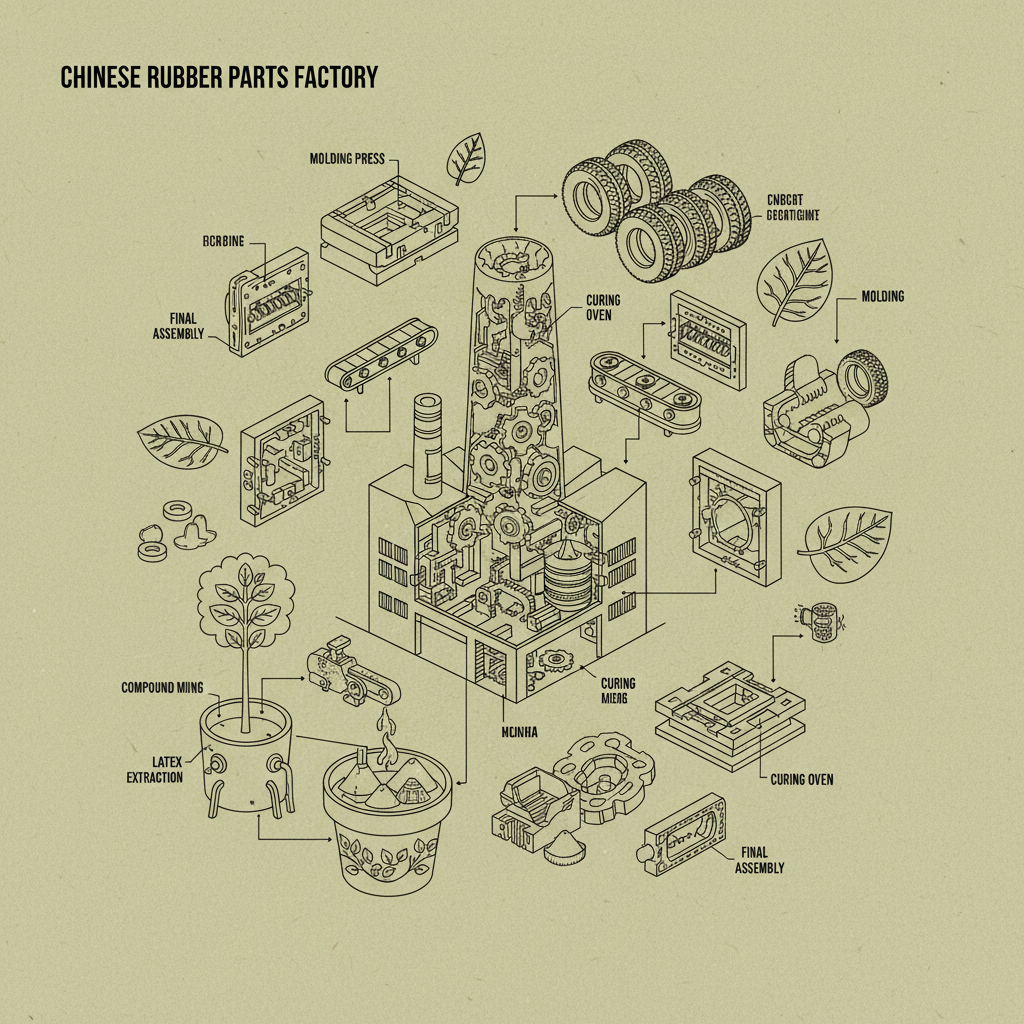

Chinese rubber parts factory

Industry Trends and Design Pitfalls

Chinese rubber parts factory

To be honest, everyone’s talking about sustainability now. Which is good, don’t get me wrong. But a lot of these “eco-friendly” materials… they just aren’t up to snuff. They might *look* green, but they fall apart after a month. Strangely enough, the older, more established materials often hold up better. It’s a constant balancing act.

And the pressure for miniaturization? Don’t even get me started. Designers are squeezing parts into tighter and tighter spaces, without thinking about how they’ll actually be assembled on the line. It’s a nightmare for the workers, and inevitably leads to quality issues. Later... Forget it, I won't mention it.

Materials in Use: A Hands-On Perspective

We’re seeing a lot more of these fluoroelastomers – Viton, for example. Expensive stuff, but it can handle extreme temperatures and harsh chemicals. Feels almost waxy to the touch, and it doesn't smell like much, which is a plus. Then there’s EPDM, for outdoor applications. It's tough as nails, but can be tricky to bond to other materials. And honestly, the quality control on rubber coming out of some of these factories… it’s hit or miss. You really gotta inspect every batch.

I also see a lot of neoprene being used. It's a bit of an all-rounder, not exceptional in any one area, but pretty reliable. It’s got that distinct rubbery smell, though. It's good for gaskets and seals, but it can compress over time.

And don't forget the good ol' natural rubber. Still a workhorse, you know? But it's becoming more expensive, and sourcing it ethically is…a challenge.

Testing Realities: Beyond the Lab

Lab tests are fine, but they don’t tell the whole story. You need to see how these parts perform in the real world, under actual conditions. We do a lot of stress testing on-site, putting parts through the same abuse they’ll experience during installation and operation. We’ve rigged up simple setups – hydraulic presses, impact testers, things like that. It’s not pretty, but it works.

We also pay close attention to how the parts *feel*. Does the rubber compress smoothly? Does it rebound quickly? Is it too sticky or too brittle? Sounds silly, but these subjective assessments can be incredibly valuable.

The biggest problem with lab testing is that it often doesn't replicate the vibrations and shocks that parts experience in the field. It’s a big gap, and we’re always trying to bridge it.

Practical Applications and User Behavior

These rubber parts end up everywhere, right? Automotive, aerospace, medical devices, industrial machinery… you name it. But it's funny how people actually *use* them. You design a part to be installed a certain way, and then the guys on the assembly line figure out a completely different method that’s faster and easier. You gotta be flexible and adapt.

I've seen guys using rubber hammers to force parts into place that were clearly designed for a more delicate touch. And then they wonder why things break. It’s a learning process, I guess.

Chinese Rubber Parts Factory: Performance Comparison

Advantages, Disadvantages, and Customization

The biggest advantage of working with a Chinese rubber parts factory? Cost, plain and simple. You can get a lot of parts for your money. But that comes with trade-offs, obviously. Communication can be a challenge, quality control needs to be rigorous, and lead times can be longer. Anyway, I think it's worth it if you do your homework.

Customization is huge these days. Last week, a customer wanted a specific shade of blue for their rubber grommets, to match their brand color. Seemed simple enough, but getting the color *exactly* right took a lot of back-and-forth. They were very particular.

Customer Story: The Debacle

Last month, that small boss in Shenzhen who makes smart home devices insisted on changing the interface to for their rubber dust covers. Said it was the future, everyone was using it. I warned him it would increase the cost and complexity, but he wouldn't listen. The result? The covers were too tight, they were cracking during assembly, and he ended up having to redesign the whole thing. Cost him a fortune. He still won't admit he was wrong.

It just proves, sometimes sticking with what works is the smartest move.

Performance Metrics and Analysis

We track a lot of metrics, from tensile strength to elongation at break to hardness. But the most important metric is customer satisfaction. If they’re happy, we’re happy. Simple as that.

We also keep an eye on defect rates, of course. But we don’t just count the number of defects, we try to understand *why* they’re happening. Is it a material issue? A tooling problem? A process error?

Here’s a quick rundown of some key metrics we track:

Key Performance Indicators for Chinese Rubber Parts Factory

Metric Target Value Measurement Frequency Action Plan (if below target)
Tensile Strength (MPa) ≥ 20 Weekly Review material batch, adjust mixing parameters.
Elongation at Break (%) ≥ 300 Weekly Investigate potential filler issues, check compound formulation.
Hardness (Shore A) 80 ± 5 Daily Adjust curing time, verify compound consistency.
Defect Rate (%) ≤ 1 Daily Root cause analysis, implement corrective actions.
Dimensional Accuracy (mm) ± 0.1 Batch-based Tooling inspection, recalibration if needed.
Customer Satisfaction (Scale 1-5) ≥ 4 Monthly Address feedback, improve communication, and quality control.

FAQS

What is the typical lead time for a custom rubber part order?

Lead times really depend on the complexity of the part and the current workload at the factory. Generally, you're looking at 4-6 weeks for a new tool, and 2-4 weeks for production after tooling is complete. But honestly, it can vary. It's always best to discuss your specific requirements with us to get a more accurate estimate. We always try to be realistic with timelines, because delays are a headache for everyone involved.

What file formats do you accept for part designs?

We prefer 3D models in STEP or IGES format. 2D drawings in PDF or DWG are also acceptable, but they require more interpretation. The clearer the design, the smoother the process. We've had some headaches with poorly formatted drawings in the past, so we're pretty strict about this. It saves everyone time in the long run.

What’s the minimum order quantity (MOQ)?

The MOQ varies depending on the size and complexity of the part. For simpler parts, it can be as low as 500 units. For more complex parts with new tooling, it’s typically around 1000. We understand that startups and small businesses may not need large quantities, so we try to be flexible. But remember, tooling costs need to be recouped somehow.

What quality control processes are in place?

We have a pretty rigorous quality control process. It starts with incoming material inspection, followed by in-process inspection during production, and finally, a final inspection before shipment. We use a variety of tools and techniques, including visual inspection, dimensional measurement, and functional testing. We’re happy to provide detailed quality reports upon request. Honestly, it’s the only way to sleep at night.

Can you help with material selection?

Absolutely! We have a lot of experience working with different rubber materials. We can help you choose the best material for your application based on your specific requirements – temperature, chemical resistance, flexibility, etc. We often recommend a few different options, and then let the customer decide what works best for them. It’s a collaborative process.

Do you offer prototyping services?

Yes, we do! We can create prototypes using 3D printing or soft tooling. This allows you to test the form, fit, and function of your part before committing to full production. It's a great way to identify and fix any potential issues early on. It'll save you time and money in the long run, trust me.

Conclusion

Ultimately, whether a Chinese rubber parts factory can deliver or not boils down to a blend of understanding the materials, knowing the limitations, and having a realistic expectation of what's achievable. It's not just about finding the cheapest price; it's about finding a reliable partner who can consistently produce quality parts that meet your needs.

My advice? Don't be afraid to ask questions, visit the factory if you can, and build a relationship with the people on the ground. Because ultimately, whether this thing works or not, the worker will know the moment he tightens the screw.

Ryan Clark

Ryan Clark

Ryan Clark is a Sales and Application Engineer at Sunlite Science & Technology, focusing on the tool and automotive markets. With a background in Mechanical Engineering, Ryan excels at understanding customer needs and translating them into effective solutions utilizing Sunlite’s advanced polymer materials. He frequently collaborates with the R&D team during the front-end innovation phase, providing valuable feedback from a customer perspective. Ryan is responsible for building strong relationships with key accounts, demonstrating the benefits of Sunlite’s full-lifecycle support system, and driving revenue growth within his target markets. He regularly presents Sunlite’s capabilities at industry trade shows.
Next Navigating the Vietnam Rubber Parts Factory Landscape for Optimal Manufacturing

If you are interested in our products, you can choose to leave your information here, and we will be in touch with you shortly.

  • captcha